
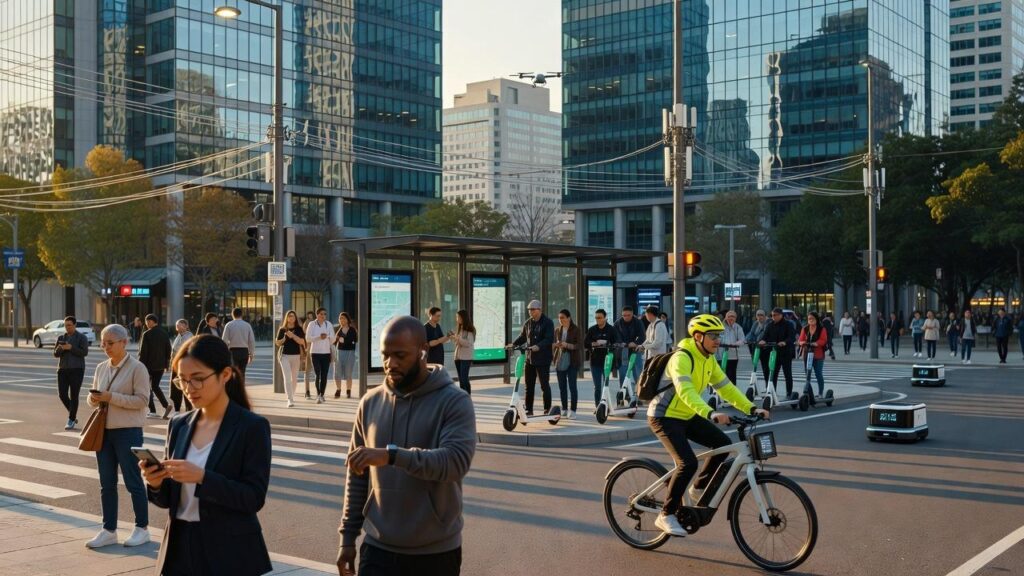
Transforming Social Interactions and Personal Connections
Social networks and dating applications filled gaps created by remote work, food delivery, and dense urban planning. Random street encounters declined as people ordered essentials online and attended meetings virtually. Digital tools stepped into that vacuum and now mediate many personal connections.
From dating apps to various forms of finding companionship, digital platforms expanded options for time-pressed city dwellers. In cosmopolitan cities of the Middle East like Beirut, these changes stand out sharply. Modern online services made access to personalized offerings more convenient and discreet, including escort beirut.
The paradox persists. People maintain more digital contacts than ever yet report higher loneliness in surveys conducted across Asian and European megacities. Convenience arrives at the cost of spontaneous interaction. Private messaging delivers instant replies while reducing the subtle social skills practiced during face-to-face encounters. Cities must now design both digital and physical spaces that encourage genuine connection rather than mere connectivity.
The Rise of Smart Cities and Digital Infrastructure
Singapore, Barcelona, and Seoul lead current smart-city deployments. These cities embedded IoT sensors across streets, buildings, and utilities. The sensors feed big data platforms that AI processes to adjust traffic signals, manage waste collection, and predict maintenance needs before failures occur.
City managers in Seoul reduced water leakage by 23 percent after installing smart meters in 2024. Barcelona cut energy consumption in public buildings by 17 percent through automated climate-control systems. Officials now make decisions based on live dashboards instead of quarterly reports.
Residents experience the change directly. Street lights dim when no one walks by. Waste bins signal collection trucks only when full. These small adjustments compound into quieter, cleaner, and more responsive environments. The infrastructure no longer waits for problems. It anticipates them.
Revolutionizing Urban Transportation and Mobility
Ride-sharing applications, adaptive traffic signals, and real-time navigation apps changed how people move. McKinsey estimates that full smart-mobility deployment can cut commute times by 15 to 20 percent. Cities that synchronized traffic lights with AI reduced average wait times at intersections by 22 percent in pilot programs.
Electric vehicle charging networks expanded rapidly. Seoul added 1,400 new stations in 2025 alone. Early autonomous shuttles now operate on dedicated lanes in Singapore’s business district during peak hours. These vehicles lowered accident rates on test routes by 31 percent compared with human-driven equivalents.
The environmental payoff appears clearly. Cities that combined ride-sharing incentives with smart parking systems reported 12 percent fewer vehicles entering downtown areas during morning rush. Residents reclaim time once lost to traffic and spend it on work, family, or rest.
Enhancing Public Health, Safety, and City Services
Public safety systems evolved beyond simple cameras. AI-enabled networks in Singapore detect unusual crowd movements and alert officers within 40 seconds. Predictive policing models that analyze historical crime data helped Seoul allocate patrols more effectively and cut response times to violent incidents by 14 percent.
Municipal services also improved. Smart waste systems reroute collection trucks dynamically. Water-quality sensors alert authorities to contamination within minutes rather than days. These technologies convert reactive city management into proactive protection of residents.
Advancing Urban Sustainability and Environmental Management
IoT sensors track air quality block by block. Cities use this data to adjust traffic patterns and factory output in real time. Seoul reduced fine particulate levels by 29 percent between 2023 and 2026 through such dynamic controls.
Waste-management systems equipped with fill-level sensors cut collection miles by 37 percent in Barcelona. Cities optimized water distribution with pressure sensors and leak-detection algorithms, achieving reductions in consumption between 15 and 25 percent. AI-driven building-management systems lowered energy demand in commercial districts by adjusting lighting, heating, and cooling based on occupancy.
These gains accumulate. Leading smart cities now report 18 to 27 percent drops in their overall carbon footprints compared with 2019 baselines. Technology alone cannot solve climate challenges, yet it provides precise instruments that make meaningful progress measurable and repeatable.
Challenges and the Future of Technology-Driven Urban Life
Digital divides remain visible. Low-income neighborhoods often receive sensors and high-speed coverage later than affluent districts. Research from South Korea shows that while smart-city projects improve civic participation, they simultaneously heighten concerns about data privacy and government transparency.
Dependence creates vulnerability. When systems fail, as happened during a 2025 cybersecurity incident in a major European capital, entire transportation networks halt. Ethical questions around AI decision-making in policing and resource allocation demand clearer governance frameworks.
Looking ahead, 5G and upcoming 6G networks will enable denser sensor deployment and near-instantaneous data exchange. Metaverse applications may offer virtual public spaces that supplement physical ones. These tools promise richer urban experiences if cities maintain focus on human needs. Success depends on deliberate balance between technological capability and human judgment.
Conclusion
Technology reshapes modern city life with undeniable force. Smart infrastructure, intelligent mobility, predictive health systems, and sustainability tools deliver measurable improvements. McKinsey research indicates potential gains of 10 to 30 percent in quality-of-life metrics when cities implement these solutions comprehensively. Reduced travel times, lower accident rates, and cleaner environments become achievable rather than aspirational.
Yet the same systems raise legitimate concerns about privacy, equity, and social isolation. The cities that thrive in 2026 and beyond will not simply adopt the newest technology. They will integrate it thoughtfully while preserving spaces for unmediated human contact and protecting citizen data. The future of urban life hinges less on how sophisticated the tools become and more on how wisely societies choose to use them. Citizens, planners, and technologists share responsibility for steering this transformation toward genuine livability.